Existing patio is heaving, settling, or cracking after freeze-thaw cycles
Old concrete slab is stained, pitted, or has separated joints
Pavers have shifted, sunk, or grown weeds in the joints
Outdoor space drains toward the house instead of away
Backyard has no usable surface for dining, fire pit, or seating
Recent project
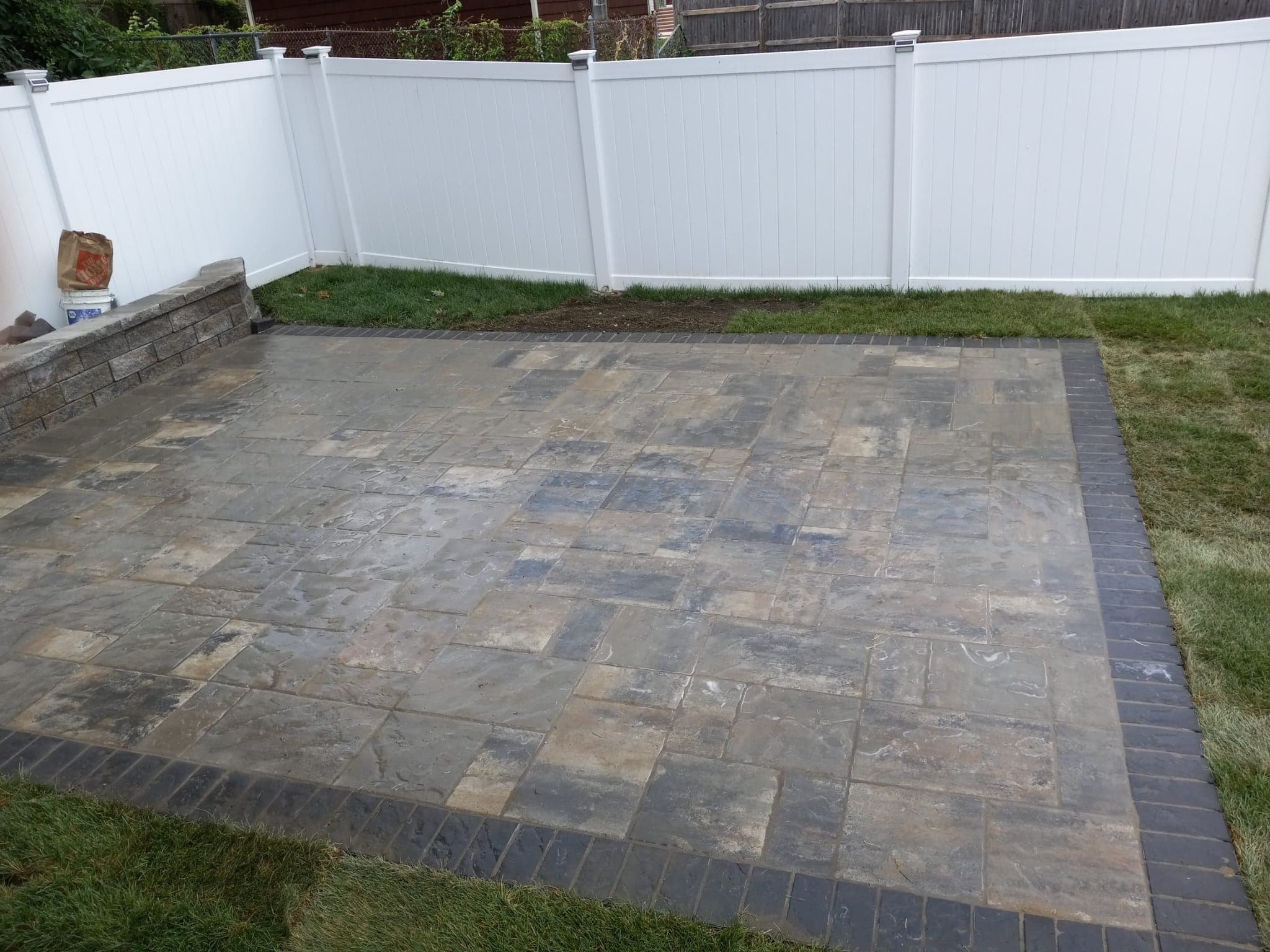
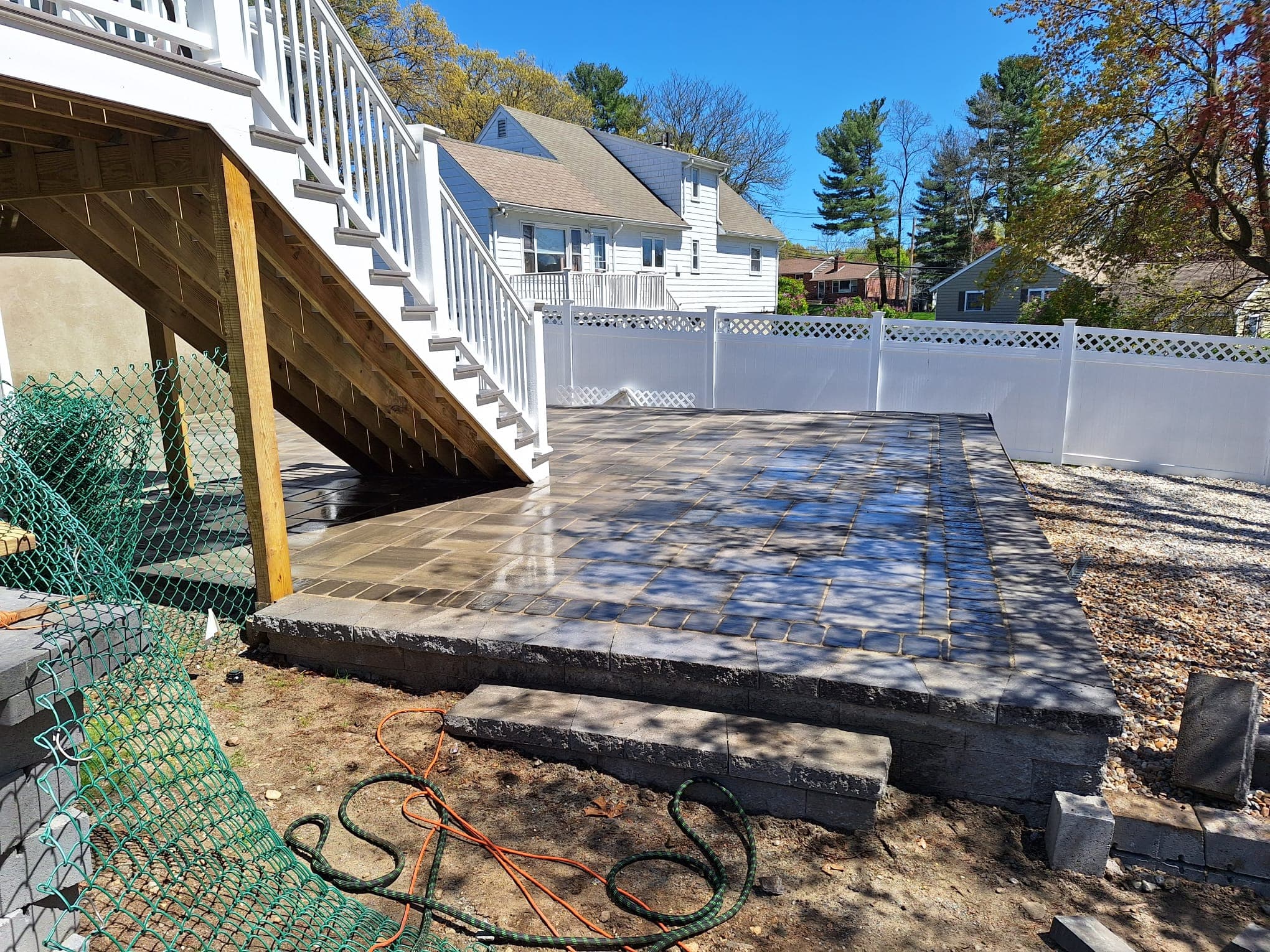
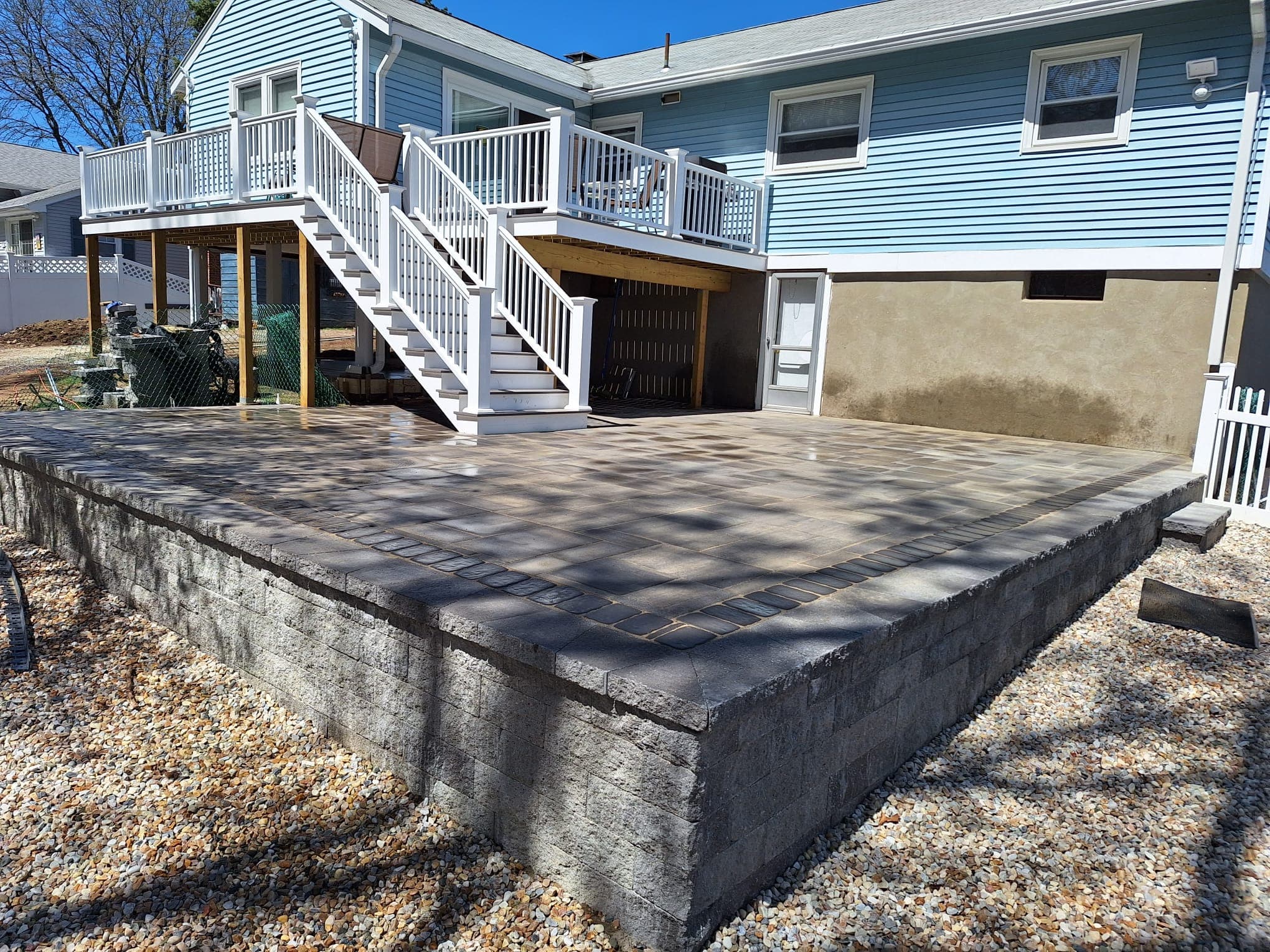
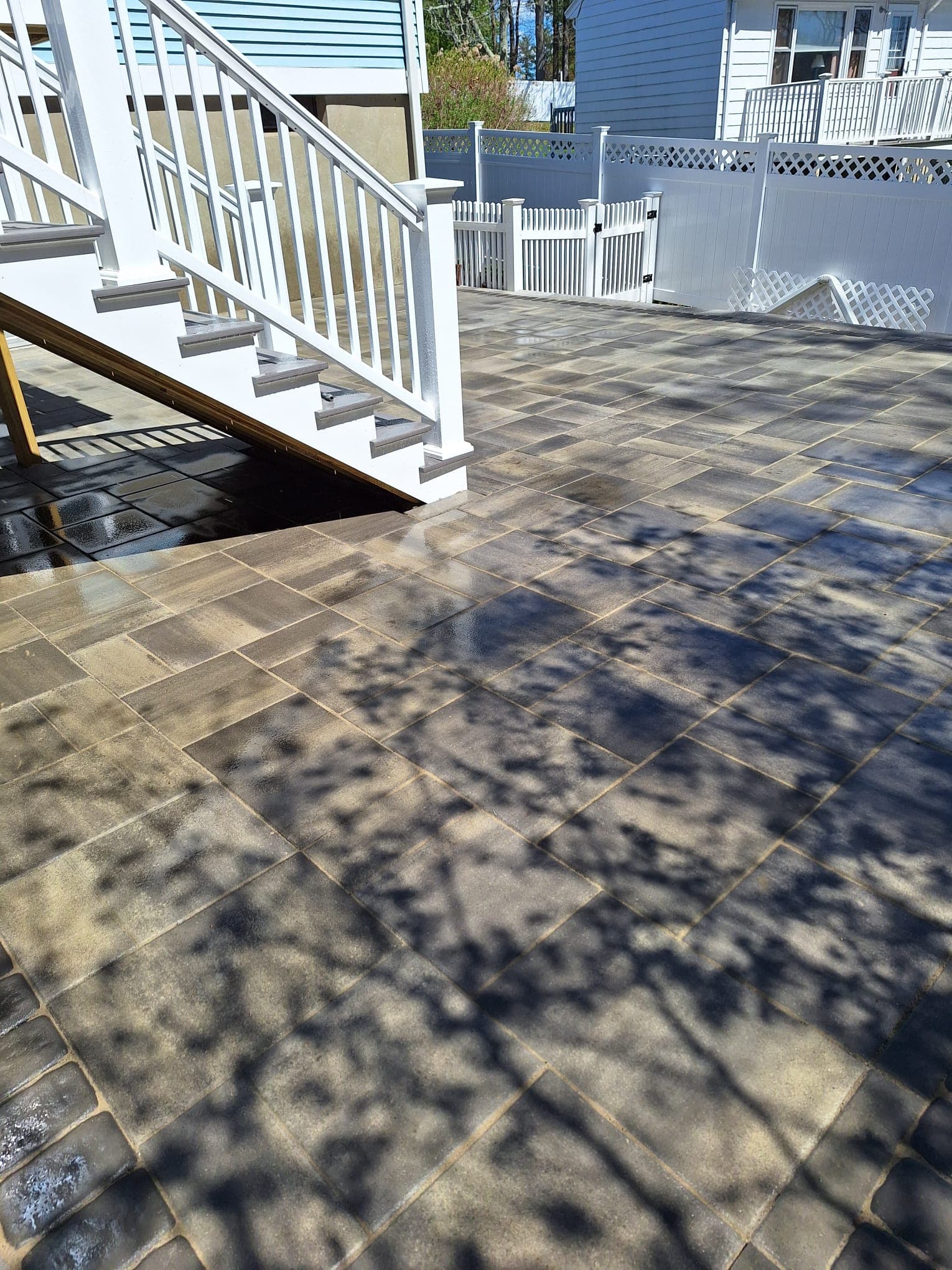
Elevated paver patio with stair access
Materials
Bluestone (Pennsylvania)
Granite cobble and slab
Concrete pavers (Techo-Bloc, Unilock, Belgard)
Natural fieldstone
Brick paver
What we inspect
Base depth and compaction (minimum 6" of compacted ¾" crushed stone)
Geotextile separator between subgrade and base
Slope (1/8" per foot minimum away from structures)
Joint sand: polymeric only — never plain sand
Edge restraint installed properly
Patio FAQ
Do I need a permit for a patio?
In most MA towns, patios under 200 sq ft do not require a permit. Conservation, wetlands, and historic district overlays may apply — we handle permitting when needed.
How long should a properly built patio last?
A patio with engineered base, geotextile separation, and polymeric joint sand will last 30–50+ years with minimal maintenance.
Can you build over my existing patio?
Almost never recommended. Old base material is rarely up to current standards, and overlaying creates trip hazards and drainage problems. Full removal and rebuild is the right approach.